
Antique mirror is decorative architectural mirror finish designed to create age, distressed, and atmospheric reflective surfaces that introduce warmth, texture, and character into a space. Unlike standard mirrors with clean and uniform reflections, antique mirror features intentional ageing effects and decorative variations that create a softer and more luxurious appearance.
It is widely specified for luxury residential, hospitality, retail, and commercial projects in Singapore where designers want a timeless reflective finish with greater depth and architectural presence.
At Tekcoglas, we supply, fabricate, and install custom antique mirror panels for architectural and interior applications, with options to tailor ageing intensity, reflection clarity, colour tone, panel layout, and overall visual effect to suit the project requirements.
Antique mirror is decorative mirror finish designed to replicate the appearance of naturally age mirrors.
Instead of producing a perfectly clean reflection, antique mirror introduces controlled decorative imperfections and distressed reflective effects.
This creates effects such as:
Antique mirror is often used when a project requires reflective surfaces that feel more refined, layered, and visually rich compared to standard mirrors.
Antique mirror is typically specified for several architectural and interior design reasons.
Unlike standard mirrors, antique mirror diffuse reflections slightly, creating a more relaxed and luxurious visual effect.
The distressed mirror surface introduces texture and variation that helps interiors feel richer and more layered.
Antique mirror finishes work well across many design styles, including luxury residential, hospitality, contemporary, and classical interiors.
Designers can create statement walls and decorative surface while still maintaining the openness and brightness associated with mirror finishes.
Antique mirror is commonly used in:
Depending on the application requirements, antique mirror can also be laminated onto safety glass build ups for additional protection and durability.


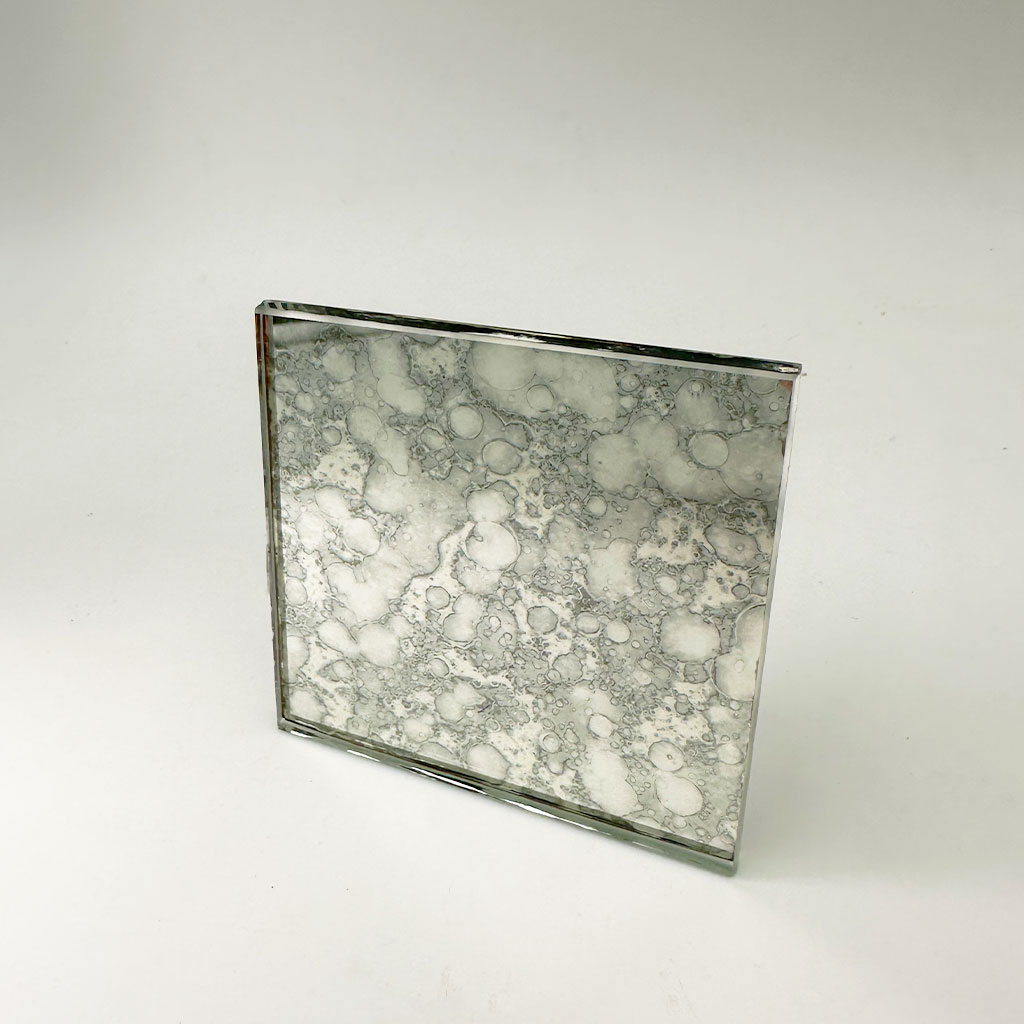
Antique mirror is available in various ageing styles, reflection intensities, and colour tones depending on the intended architectural effect.
Common design directions include:
When selecting antique mirror, it is helpful to define:
If you are unsure which antique mirror finish is suitable for your project, Tekcoglas can assist in selecting the appropriate specification and sample.
Modern antique mirror finishes can be produced using several manufacturing methods. The chosen method influences the appearance, consistency, customisation possibilities, and overall character of the finished mirror.
Historically, antique mirror was created by intentionally ageing the reflective backing of mirror glass through controlled chemical processes. This produced the random distressed effects commonly associated with vintage mirrors.
Characteristics include:
Because of the variability involved, this method is less commonly used for larger scale architectural projects today.
Most antique mirror products specified today are produced using controlled manufacturing techniques that replicate aged mirror effects while providing greater consistency and repeatability.
Benfits included:
This is the most common form of antique mirror used in hospitality, retail, residential, and commercial interiors.
Certain antique mirror finishes can be produced using advanced digital printing technology.
This allows designers to create customised ageing patterns, decorative effects, and unique visual style while maintaining consistency across multiple panels.
Benfits included:
This approach is often used when a project requires a specific antique mirror appearance that cannot be achieved using standard products.
Antique mirror can also be combined with:
This allows designers to create more layered and customised decorative installations.
When specifying antique mirror, it helps to confirm:
Because antique mirror finishes are intentionally decorative and varied, sample approval is typically recommend before final production.
Not sure whether antique mirrors are suitable for your application ? read our How to Choose Decorative Glass Guide to compare privacy, lighting, maintenance and design considerations.
Antique mirror is often part of a broader decorative glass strategy. For a full overview of finishes and design approaches, refer to our main hub page:
Looking to specify or customise a decorative glass design for your next project ? Contact Tekcoglas Design for technical advice, colour matching and finished samples.
